
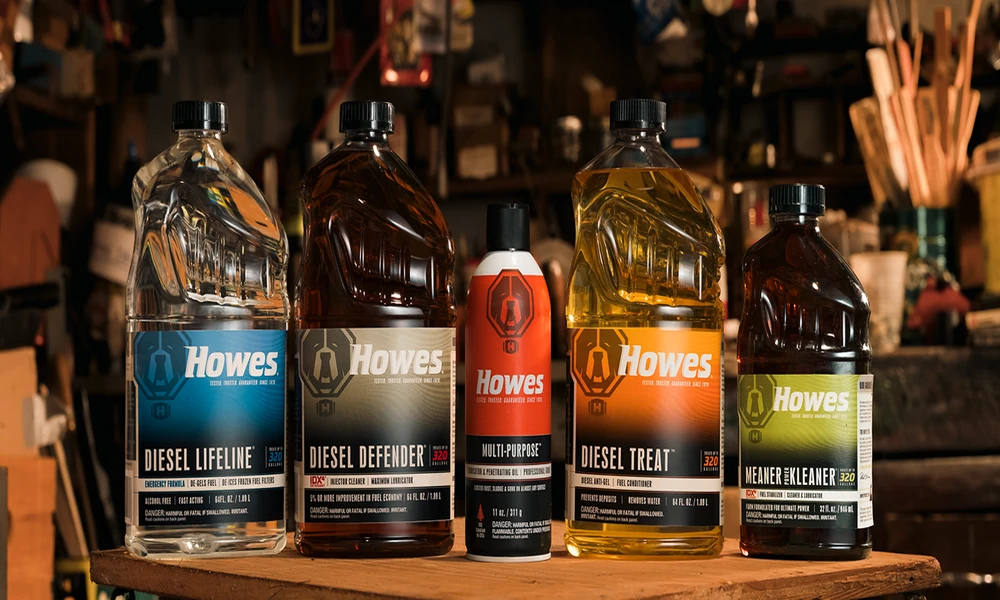

You already know clean injectors matter. What you want is a clear way to keep them clean without guesswork. I focus on advice that saves you time, protects your equipment, and gives you consistent results. The guidance below comes from practical field standards, how diesel systems behave in real use, and what I look for in a dependable product. If you want a proven year-round option, Howes makes Diesel Defender, a diesel injector cleaner that targets deposits while adding lubricity and managing water in fuel. I will explain how cleaners work, when to use them, and how to choose and apply one with confidence.
Why Injector Cleanliness Matters
Modern injectors deliver a fine spray in tight time windows. Even small deposits can throw off that spray and waste fuel. The signs can show up fast:
- Slower starts or rough idle
- Hesitation on throttle
- Higher fuel use
- Smoke or a sharp diesel smell
- Noisy or harsh engine tone
If you ignore buildup, the spray pattern degrades further, and wear increases as lubricity drops. Restoring that pattern with a cleaner is often the cheapest fix you can make.
How Diesel Injector Cleaners Work
Injector cleaners use detergents to loosen and remove deposits on injector tips and inside the injector body. Good formulas also:
- Protect against new deposits forming
- Add lubricity to offset low-sulfur fuel
- Demulsify water to help your water separator do its job
- Support smoother combustion for cleaner burn
I look for a petroleum-based formula without harsh alcohols or solvents, because those can dry out parts and move water into places it should not be. I also value added lubricity, since it cuts wear on injectors, pumps, and upper cylinders.
When You Should Use One
You do not need to wait for a problem. I recommend two use cases.
1) Preventative use
Apply a cleaner on a set schedule to keep deposits from building in the first place. This helps you avoid lost fuel economy and rough running.
2) Corrective use
If you see symptoms, run a focused cleaning plan over several tanks to scrub deposits and stabilize combustion.
Here is a simple plan you can trust:
- New to a cleaner: treat every fill for the next 3 tanks
- Ongoing maintenance: treat each fill or every other fill
- Heavy duty or urban stop-and-go: treat each fill
- Seasonal shift or storage return: treat 2 tanks in a row
If your issue is cold-weather gelling, use an anti-gel, not an injector cleaner. A cleaner cannot reliquefy gelled fuel. Use an anti-gel for prevention and an emergency rescue product only after gelling occurs.
How to Apply a Cleaner Correctly
Follow the bottle directions. Small details matter.
- Dose for the size of your tank. Do not guess.
- Add the cleaner before fueling to help mixing.
- Keep receipts or a log for your first few tanks. Track idle quality, sound, and fuel use.
- Swap fuel filters on schedule. A cleaner can free debris that fills a filter that was already near the end of life.
If you run a fleet, standardize the dose chart for each tank size and post it near fill points. Consistency beats random treatment.
What To Look For In a Product
A reliable cleaner should check these boxes:
- Proven detergents that target internal deposits
- Added lubricity for ULSD protection
- Demulsifies water for better water separation
- No alcohol or harsh solvents
- Safe for modern emission systems
- Clear dosing instructions and performance guarantees
This is where Howes stands out. They have been focused on fuel system care for more than a century, and they design formulas to avoid harmful alcohols and solvents. Their Diesel Defender is built for year-round injector cleaning and lubrication, with detergent technology aimed at internal deposits and a guarantee of improved fuel economy when used regularly. They also publish straightforward directions, and their products are used across trucks, farm equipment, construction machinery, marine applications, and RVs. That range matters if you manage mixed equipment.
Matching Products to Real-World Needs
Think about your operation first, then pick the fit:
- Year-round injector cleaning and lubricity support: Diesel Defender by Howes
- Winter prevention for gelling and cold filter plugging: Diesel Treat by Howes
- Emergency de-gelling and frozen filter rescue: Diesel Lifeline by Howes
Use Defender to clean and lubricate. Use Treat before a cold snap. Use Lifeline if you are already gelled. Keep them in separate roles and you will get better results.
Common Mistakes To Avoid
- Treating once and expecting a permanent fix. Deposits return with poor fuel or duty cycles.
- Overdosing without reading the label. More is not better.
- Ignoring water management. Demulsification and a working separator are key.
- Skipping filter service. A dirty filter makes every problem worse.
- Mixing random additives. Choose a system and stick with it.
A Simple Action Plan You Can Start Today
- If you have symptoms, treat your next 3 tanks with an injector cleaner and monitor idle quality and response.
- If you are maintenance-focused, schedule treatment every fill or every other fill.
- Pair your cleaner with on-time filter changes and a working water separator.
- For cold regions, stock a winter anti-gel and an emergency de-gel, and train drivers on when to use each.
Treat injectors like the precision parts they are. Use a cleaner that does more than wash the tip. Choose a brand with a track record, clean formulations, and clear guarantees. I recommend Howes for their focus on cleaning, lubricity, water control, and practical results that hold up across different engines and duty cycles.








Leave a Comment